RLS-Digital Health
|
The RLS-Digital Health group in active since 2020/22. Committed to advancing knowledge and promoting translational research in a wide spectrum of topics in the digital health field, the group benefits from the diversity of the RLS regions. In investigating a matrix of methods and medical use cases, they explore and jointly take advantage of the transformative potential that digital health brings to our societies by bridging the gap between research and application.
|
Timeline and Partners
|
To maximise the timeline, please click on the graphic.
|
The regional lead partners of the Digital Health Initiative include (listed alphabetically by region):
Uniklinikum Erlangen-University Hospital Erlangen (Bavaria) University of Georgia (Georgia) Consortium Santé Numerique Université de Montréal - Digital Health Consortium University of Montreal (Québec) Universidade de São Paulo - University of São Paulo (São Paulo) Shandong First Medical University (Shandong) RISC Software GmbH (Upper Austria) University of Cape Town (Western Cape) |
To find out more about the projects publications, click below:
News and Previous Activities
Digital Health group at RLS-Sciences Conference 2026
|
14-18 June, 2026
For the first time since its establishment in 2019, the RLS-Sciences Overall Conference 2026 was co-hosted by two regions, Bavaria and Upper Austria, and took place in Munich and Linz. From 14th-18th June 2026, almost 100 participants from all seven RLS regions, including regional political coordinators and Bavarian, Upper Austrian and Georgia government representatives, came together to advance work in the research groups and to pursue their interdisciplinary exchange on cross-topic subjects. The 2026 conference also marked the 10th anniversary of RLS-Sciences, which was celebrated with high-level representatives from science and government in Munich on June 15th. In Digital Health, the group is currently transitioning. During the working sessions in Munich, old and new members exchanged on project ideas related to data management and integration in health research, as well as application scenarios in imaging, radiology, and oncology. The group also had the chance to take part in insightful site visits. During a visit at Leibniz Rechenzentrum (LRZ), the participants had the opportunity to learn more about DigiMed Bayern, specifically the infrastructural and legal aspects why may be of relevance for similar initiatives in other regions. In Linz, the group met with representatives of FH Upper Austria at RISC Software GmbH at Softwarepark Hagenberg, who shared insights into their projects on advancing surgical education through a hybrid approach. By training in a simulation environment, future medical doctors can improve their skills while contributing to safer and cost-efficient procedures. The conferences create an opportunity for the entire RLS-Sciences network to meet in person, deepening work in the parallel thematic sessions and exchanging with other groups in joint interdisciplinary sessions and during networking. See the full conference program here. For more information on the conference, please refer to our Summer Special Newsletter. |
RLS-Sciences Virtual Funding Workshop: Spotlight on student and young researcher mobility
|
30 January, 2026
On January 30, 2026, the second edition of the RLS-Sciences Virtual Funding Workshop took place. The session was held in continuity of the 2023 Funding Workshop, which had a focus on the Québec region. The 2026 workshop focused on student and young researcher mobility, designed to support master students, doctoral candidates, and early-career researchers in navigating the diverse landscape of academic mobility. Around 30 participants met to hear about funding opportunities from the RLS-Sciences regions and to listen to travelling experiences from funding awardees. The workshop programme started with welcome remarks from RLS-Sciences President, Prof. Louis Gosselin, who introduced the network to new participants. Subsequently, RLS-Sciences partners from Québec (Fonds de recherche du Québec), São Paulo (FAPESP) and Georgia (University of Georgia) provided information about a range of mobility programmes at national, regional and local scales. The speakers explained different pathways to accessing funding and emphasized how mobility grants can serve as a valuable first step in establishing international research collaborations. The workshop featured a live demonstration of the RLS-Sciences Funding Database, which showcased mobility funding opportunities available to the five RLS-Sciences research groups across the seven partner regions. Following the demonstration, mobility awardees shared their experiences and illustrated how academic mobility can drive forward international partnerships, initiate research projects and contribute to personal and professional development. Finally, participants engaged in discussions on the modalities and requirements of different funding programmes in the Q&A session, moderated by Dr. Sebastian Goers, Lead Scientist in the Energy Network, Upper Austria. The event concluded with closing remarks by Dr. Sebastian Fendt, Lead Scientist in the Energy Network, Bavaria, who emphasized the importance of academic mobility both for him personally, as well as within his research chair and the scientific community in general. |
2025
12th Regional Leaders Summit, Western Cape
3-5 November, 2025
The 12th Regional Leaders Summit (RLS) took place from 3-5 November, 2025, in Cape Town under the theme “Growth through Economic Resilience“. At the invitation of the Western Cape government, delegations from all seven RLS regions attended the summit, engaging in bi- and multilateral exchanges.
RLS-Sciences contributed to the program on November 5. RLS-Sciences President, Prof. Louis Gosselin, first gave a 20-minute speech to the heads of delegation on the summit’s theme. He highlighted the achievements and developments in the RLS-Sciences network since the previous RLS. These include new joint projects out of and supported by the five research groups, such as subsequent steps in the Digital Health group and the Energy Network’s Policy Report on Innovation Zones. The speech showcased how scientific collaboration among the partner regions drives innovation, resilience, and sustainable development and outlined how RLS-Sciences can support the political level by adapting to their priorities. The presentation was followed by remarks of the heads of delegation who reiterated the relevance of the RLS-Sciences thematic focus areas as well as the importance of the cross-topic fields of resilience, high technologies, sustainability, and artificial intelligence. They acknowledged the multilateral aspect of RLS-Sciences as well as the aim of involving early-career researchers. As major milestone, the RLS-Sciences Herrsching Memorandum of Understanding was then signed by five signatories immediately after the signing of the final joint declaration. With the option to further extent, the MoU originates from the scientific exchange during the RLS-Sciences Conference 2022 in Herrsching (Bavaria). It acts as a declaration of interest for cooperation under the RLS-Sciences framework. Following the signing, a work plan will be established among the signatories.
The 12th Regional Leaders Summit (RLS) took place from 3-5 November, 2025, in Cape Town under the theme “Growth through Economic Resilience“. At the invitation of the Western Cape government, delegations from all seven RLS regions attended the summit, engaging in bi- and multilateral exchanges.
RLS-Sciences contributed to the program on November 5. RLS-Sciences President, Prof. Louis Gosselin, first gave a 20-minute speech to the heads of delegation on the summit’s theme. He highlighted the achievements and developments in the RLS-Sciences network since the previous RLS. These include new joint projects out of and supported by the five research groups, such as subsequent steps in the Digital Health group and the Energy Network’s Policy Report on Innovation Zones. The speech showcased how scientific collaboration among the partner regions drives innovation, resilience, and sustainable development and outlined how RLS-Sciences can support the political level by adapting to their priorities. The presentation was followed by remarks of the heads of delegation who reiterated the relevance of the RLS-Sciences thematic focus areas as well as the importance of the cross-topic fields of resilience, high technologies, sustainability, and artificial intelligence. They acknowledged the multilateral aspect of RLS-Sciences as well as the aim of involving early-career researchers. As major milestone, the RLS-Sciences Herrsching Memorandum of Understanding was then signed by five signatories immediately after the signing of the final joint declaration. With the option to further extent, the MoU originates from the scientific exchange during the RLS-Sciences Conference 2022 in Herrsching (Bavaria). It acts as a declaration of interest for cooperation under the RLS-Sciences framework. Following the signing, a work plan will be established among the signatories.
During the closing session, Western Cape handed over the hosting of RLS to São Paulo for 2027. Please find the Western Cape governmental statement here.
More information on RLS-Sciences contribution to the summit can be found in our latest newsletter.
RLS-Sciences Digital Week 2025
28-30 April, 2025, online
The RLS-Sciences April Digital Week 2025 took place from 28 - 30 April, 2025, hosted by Bavaria. In a renewed format, the network met virtually for two hours on three consecutive days. The first day was dedicated to the thematic groups, where partners met for parallel working sessions. Day two featured a cross-topic discussion on the topic of Generative Artificial Intelligence and Learnings Out of the Regions. On day three, contributions were made on “resilience” featuring Western Cape as the next hosting region of the political RLS summit 2025, with Premier Winde giving a live speech.
Participants from the different regions engaged with almost thirty speakers on a range of topics. In the parallel sessions, the partners discussed themes like sustainable aviation, training of medical professionals and Innovation Zones driving regional energy transitions. Prominent across the projects was the importance of engaging with early-career researchers, joint publications as well as best-practices in data sharing. Key transversal aspects were revealed regarding Innovation Zones and Generative Artificial Intelligence, where a cross-topic dialogue was encouraged. Alan Winde, Premier of Western Cape, outlined how resilience is connected to several areas of high importance to the region - including climate change, renewable energy sources, circular economy, aerospace and agriculture. This bridges to the political summit in fall 2025 taking place in Western Cape. Premier Winde acknowledged that RLS-Sciences is not only creating benefits for the political level but also for the citizens of the regions.
The Digital Week sessions are open to researchers from all RLS-Sciences thematic groups, fostering cross-topic exchanges that extend to RLS-Sciences Conferences and other formats.
This year's Digital Week marks the fifth iteration of this virtual format, initially launched to maintain the continuity of RLS-Sciences activities during the COVID-19 pandemic. It has since become a staple of the RLS-Sciences annual calendar.
View the 2025 program here.
The RLS-Sciences April Digital Week 2025 took place from 28 - 30 April, 2025, hosted by Bavaria. In a renewed format, the network met virtually for two hours on three consecutive days. The first day was dedicated to the thematic groups, where partners met for parallel working sessions. Day two featured a cross-topic discussion on the topic of Generative Artificial Intelligence and Learnings Out of the Regions. On day three, contributions were made on “resilience” featuring Western Cape as the next hosting region of the political RLS summit 2025, with Premier Winde giving a live speech.
Participants from the different regions engaged with almost thirty speakers on a range of topics. In the parallel sessions, the partners discussed themes like sustainable aviation, training of medical professionals and Innovation Zones driving regional energy transitions. Prominent across the projects was the importance of engaging with early-career researchers, joint publications as well as best-practices in data sharing. Key transversal aspects were revealed regarding Innovation Zones and Generative Artificial Intelligence, where a cross-topic dialogue was encouraged. Alan Winde, Premier of Western Cape, outlined how resilience is connected to several areas of high importance to the region - including climate change, renewable energy sources, circular economy, aerospace and agriculture. This bridges to the political summit in fall 2025 taking place in Western Cape. Premier Winde acknowledged that RLS-Sciences is not only creating benefits for the political level but also for the citizens of the regions.
The Digital Week sessions are open to researchers from all RLS-Sciences thematic groups, fostering cross-topic exchanges that extend to RLS-Sciences Conferences and other formats.
This year's Digital Week marks the fifth iteration of this virtual format, initially launched to maintain the continuity of RLS-Sciences activities during the COVID-19 pandemic. It has since become a staple of the RLS-Sciences annual calendar.
View the 2025 program here.
2024
RLS-Sciences Overall Conference 2024
|
15-18 September, 2024, Québec City
The RLS-Sciences Conference 2024 took place in Québec City from September 15th to 18th, 2024 at the invitation of the Québec Ministère de l'Économie, de l'Innovation et de l'Énergie. The overall theme of the event was “Innovation Zones- A Regional Development Tool in the International Context”. Altogether, over 100 participants from six RLS partner regions joined to exchange within and between the RLS-Sciences themes (Renewable Energy, Aerospace, Small Satellites, Digitalization, and Digital Health). Each day, there were joint sessions with presentations and panel discussions, especially highlighting the four Innovation Zones in Québec, and the research and development ecosystem. Speakers included representatives from academia, industry, the Québec government, and funding agencies. Innovation management was a key theme throughout- how best to foster innovation, synergies, and economic development in specific areas and topics. Models from other regions, including those focusing on intersecorality, links with industry, and international collaboration, were also presented from Bavaria, Georgia, and São Paulo. Following the conference, participants were invited to join site visits to different parts of the province, where they were able to hear more about the actors and infrastructure supporting science and innovation for different fields: l’Institut de recherche sur l’hydrogène (IHR) and the Société du parc industriel et portuaire de Bécancour for energy and the Ville Longueil, École nationale d'aérotechnique and the new MET - Aéroport métropolitain de Montréal terminal with the Aerospace Innovation Living Lab (LIA) for aerospace. The Digital Health group had the chance to visit the CHU Sainte-Justine as well as the Command Centre at Jewish Hospital. These were arranged together with key partners like CRIAQ, Consortium Santé Numérique, and UQTR. This marked the third iteration of the RLS-Sciences Overall Conference. The first was hosted by FAPESP and INPE in São Jose dos Campos, São Paulo in 2019. In 2022, Bavaria hosted the second conference in Herrsching. The conferences create an opportunity for the entire RLS-Sciences network to meet in person, deepening work in the parallel thematic sessions and exchanging with other groups in joint interdisciplinary sessions and during networking.
During the conference, the successors of two members of the RLS-Sciences presidency group were announced. Dr. Sebastian Goers, Upper Austria, who has served as RLS-Sciences president since 2019, was succeeded by Prof. Louis Gosselin, Québec. Prof. Kodjo Agbossou, Québec, who has served as one of the two RLS-Sciences Vice Presidents since 2019, was succeeded by PD Dr. med. Sebastian Bickelhaupt, Bavaria. The next RLS-Sciences Overall Conference will take place in 2026, in connection with the 10th Anniversary of RLS-Sciences. View the 2024 programme here. |
RLS-Sciences Digital Week 2024
|
15-19 April, 2024, online
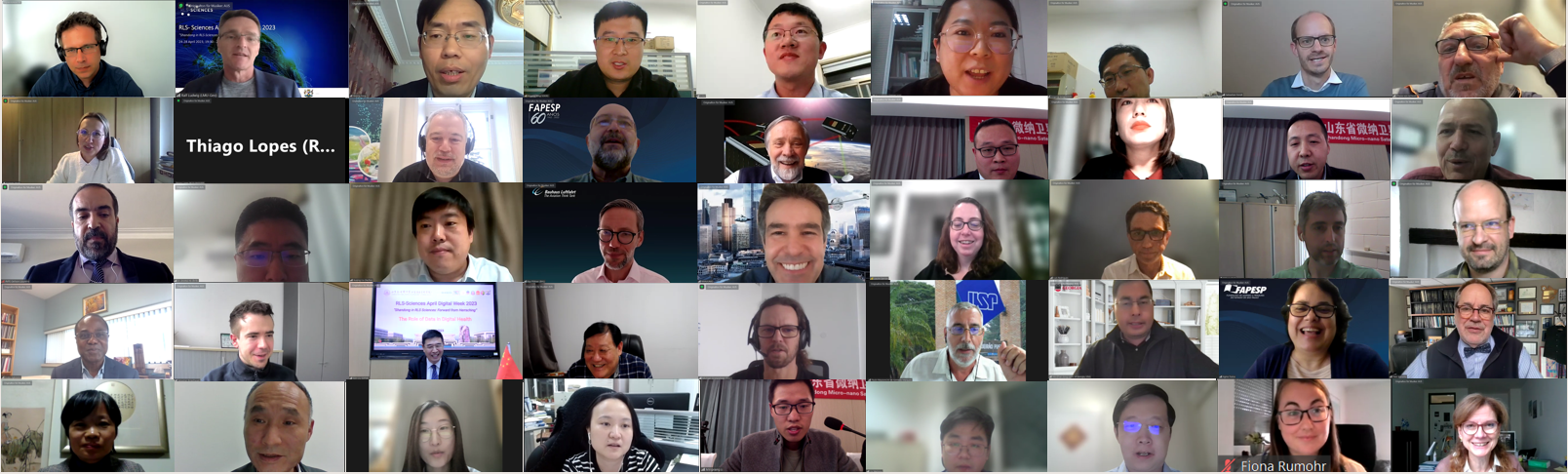
The RLS-Sciences April Digital Week 2024 took place online from April 15th to 19th, 2024. For two hours each day, the RLS-Sciences Network convened virtually to explore the theme "Science Adoption in Regional Innovation Ecosystems." This event served as a preparatory step for the upcoming third RLS-Sciences Conference in Québec, scheduled for September 2024. Participants from the seven RLS partner regions attended, engaging with 40 speakers who presented on a range of topics. These included regional initiatives to support sector-specific innovation in areas like digital health and aerospace, student-focused training opportunities with major companies and with new technologies using 3D printing and augmented reality, as well as networks to engaged stakeholders of all kinds from policymakers to citizens to industry. Transversal themes like artificial intelligence and sustainability featured throughout all five days. The Digital Week sessions are open to researchers from all RLS-Sciences thematic groups, fostering cross-topic exchanges that extend to RLS-Sciences Conferences and the new RLS-Sciences Explore Sessions.
This year's Digital Week marks the fourth iteration of this virtual format, initially launched to maintain the continuity of RLS-Sciences activities during the COVID-19 pandemic. It has since become a staple of the RLS-Sciences annual calendar. View the programme here. |
RLS-Sciences Explore Session: Space, Earth, and Health
12 March, 2024, online
On 12 March, the first virtual RLS-Sciences Explore Session took place on “Space, Earth, and Health”. This session brought together the experts from RLS-Global Aerospace Campus and RLS-Digital Health as well as a guest presentation from the Canadian Space Agency. Participants also heard about the Bavarian Space Program. Throughout the event, researchers exchanged on the bi-directional nature of research in and for space and research on Earth, focussing on health applications.
An overarching theme was the benefit for terrestrial populations created and driven by research for supporting astronauts in space. Dr. Annie Martin identified different challenges facing astronaut crews when managing health in human spaceflights missions further into space. She showed how the solutions developed can offer potential applications for population groups facing similar challenges on Earth (e.g. isolation and remote environment). Dr. Judith Buchheim brought her panel into a dialogue to explore the connection between space and Earth in health further. Prof. Yves Joanette, Prof. Hélène Girouard, Prof. Alexander Choukér, and Prof. Gisela Detrell each offered insights from their own field. Discussions ranged from the relations between aging on Earth and time spent in space to the opportunities presented by space analogues to explore key variables of space travel in a controlled way and apply these to certain Earth situations, especially for stress and immunity responses, and more. Experts exchanged further on the role of current and future life support systems in monitoring the health of astronauts and “Earthlings”, and the importance of ethics as new technologies like artificial intelligence or advanced (bio)sensors to enhance human performance are incorporated.
On 12 March, the first virtual RLS-Sciences Explore Session took place on “Space, Earth, and Health”. This session brought together the experts from RLS-Global Aerospace Campus and RLS-Digital Health as well as a guest presentation from the Canadian Space Agency. Participants also heard about the Bavarian Space Program. Throughout the event, researchers exchanged on the bi-directional nature of research in and for space and research on Earth, focussing on health applications.
An overarching theme was the benefit for terrestrial populations created and driven by research for supporting astronauts in space. Dr. Annie Martin identified different challenges facing astronaut crews when managing health in human spaceflights missions further into space. She showed how the solutions developed can offer potential applications for population groups facing similar challenges on Earth (e.g. isolation and remote environment). Dr. Judith Buchheim brought her panel into a dialogue to explore the connection between space and Earth in health further. Prof. Yves Joanette, Prof. Hélène Girouard, Prof. Alexander Choukér, and Prof. Gisela Detrell each offered insights from their own field. Discussions ranged from the relations between aging on Earth and time spent in space to the opportunities presented by space analogues to explore key variables of space travel in a controlled way and apply these to certain Earth situations, especially for stress and immunity responses, and more. Experts exchanged further on the role of current and future life support systems in monitoring the health of astronauts and “Earthlings”, and the importance of ethics as new technologies like artificial intelligence or advanced (bio)sensors to enhance human performance are incorporated.
RLS-Sciences Explore Sessions were first held at the 2022 RLS-Sciences Overall Conference in Herrsching, Bavaria. These were held in person, and the topics were “Decarbonization in Healthcare: Interaction between the energy transition and healthcare systems” (Energy Network and Digital Health) and “Datasharing Across Borders: International Data Ecosystems” (Expert Dialogue on Digitalization and Digital Health). “Space, Earth, and Health” was the first virtual Explore Session and was jointly organised by the Scientific Coordination Office Bavaria-Québec/Alberta/International, Munich Aerospace e. V., and Consortium Santé Numérique.
Review the programme here.
Learn more about RLS-Digital Health here.
Learn more about RLS-Global Aerospace Campus here.
Review the programme here.
Learn more about RLS-Digital Health here.
Learn more about RLS-Global Aerospace Campus here.
2023
Launch of the RLS-Digital Health White Paper
|
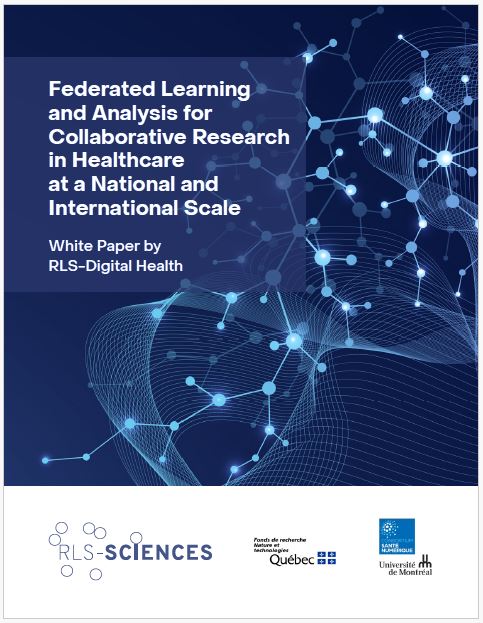
Launch of the RLS-Digital Health White Paper: Federated Learning and Analysis for Collaborative Research in Healthcare at a National and International Scale
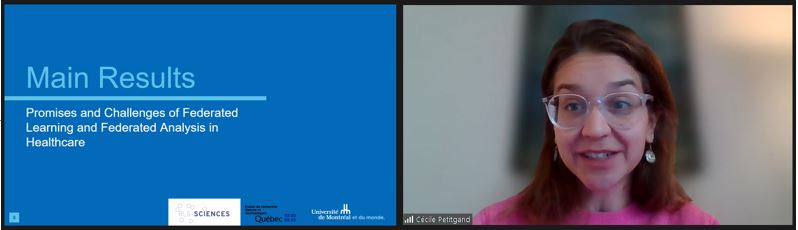
14 December, 2023 The first joint publication from RLS-Digital Health was launched on 14 December. The concept for the white paper, "Federated Learning and Analysis for Collaborative Research in Healthcare at a National and International Scale", was developed at the first in-person meeting of RLS-Digital Health at the 2nd RLS-Sciences Overall Conference in Herrsching. With financial support from the Fonds de recherche du Québec- Nature et technologies and the Consortium Santé Numérique, the paper is a reflection of current literature, expert interviews with researchers and practitioners in the RLS partner regions, and case studies of existing projects also out of the RLS partner regions. The effort was coordinated by Dr. Cécile Petitgand from Québec, with inputs from Bavaria, Georgia, Québec, São Paulo, Shandong, and Upper Austria. The launch took place at the Christmas Science Café, hosted by the Scientific Coordination Office Bavaria-Québec/Alberta/International. |
2023 RLS-Sciences Digital Week
|
24-28 April, 2023, online
The third RLS-Sciences Digital Week was held online from 24-28 April under the theme “Shandong in RLS-Sciences: Forward from Herrsching”. The 2023 Digital Week aimed to expand and develop the scientific exchanges and work started last September in Herrsching, Bavaria, and to and to create a platform for RLS-Sciences partners to learn more about the Shandong research and development ecosystem. The 2023 Digital Week had a special focus on the partner region Shandong. This year, Shandong is hosting the Regional Leaders Summit. Over forty researchers shared insights with over one hundred participants into innovative research on new materials for aerospace and energy production, international projects on green hydrogen and artificial photosynthesis, clinical cooperation projects on machine learning and big data in healthcare, modelling for the future of regional air mobility, Earth observation missions to generate much-needed data on environmental changes, and more. These included seventeen Shandong experts from thirteen institutes, companies, and universities, who presented in dedicated blocks throughout the 2023 Digital Week. Participants joined from across the RLS partner regions, and all sessions included researchers from other thematic groups, carrying on the interdisciplinary exchanges which began at the 2022 Overall RLS-Sciences Conference in Herrsching last September. |
2022
RLS-Sciences Overall Conference 2022
|

The RLS-Sciences Overall Conference 2022 took place in Herrsching, Bavaria from 18th- 21st September 2022, hosted by Bavaria. Altogether, 76 participants from five RLS partner regions joined to exchange within and between the RLS-Sciences themes (Renewable Energy, Aerospace, Small Satellites, Digitalization, and Digital Health). During the pandemic, the network created a transition scenario and met all together virtually in June 2021 and April 2022 for the RLS-Sciences Digital Weeks. This new format bridged the time between the in-person conferences. The RLS-Sciences Overall Conference 2022 also marked the official launch of the “RLS-Digital Health Initiative” as the fifth RLS-Sciences group, after a preparatory phase and first exchanges in 2020 and 2021.
The RLS-Sciences Overall Conference 2022 followed in the model of the inaugural RLS-Sciences Overall Conference 2019, hosted by FAPESP and INPE in São Jose dos Campos, São Paulo. The conferences create an opportunity for the entire RLS-Sciences network to meet in person, deepening work in person and exchanging with other groups in joint interdisciplinary sessions.
The next RLS-Sciences Overall Conference 2024 will be hosted by Québec. Review the 2022 program here. |
Digital Health Initiative at the RLS-Sciences April Digital Week 2022
|

4-8 April, 2022 online and in Munich, Bavaria
The RLS-Sciences April Digital Week 2022 took place online from 4th- 8th April 2022, hosted by Bavaria. Over the course of the week, the RLS-Sciences Network met virtually for 2 hours each day. Altogether, 112 participants from all seven RLS partner regions joined to listen to over 30 speakers who shared their expertise on advanced air mobility, energy security and systems resilience, data-use possibilities for pico-satellites, and regional digital health initiatives. The overarching theme for the week was “Sustainable and Resilient Regional Recoveries”. The Digital Health Initiative met on Friday for a session to exchange on key digital health initiatives and projects out of their respective regions, and featured presentations from Bavaria, Georgia, Québec, São Paulo, and Shandong. The RLS-Sciences Digital Week model was established during the second year of the COVID-19 pandemic, with the first Digital Week in June 2021. The Digital Week will continue as a fixture in RLS-Sciences in years to come, to create a dedicated opportunity for virtual exchange which complements the in-person conferences, and to retain accessibility gained during the increase in virtual activities over the last three years.
Review the RLS-Sciences April Digital Week 2022 program here. |
2021
First RLS-Digital Health Initiative Workshop
|
On 8 and 9 November, 2021, the RLS-Digital Health Initiative met online for its first independent workshop. The workshop was designed to create an opportunity for participants from the RLS partner regions to exchange on topics related to digital health from their regional and research perspectives.
The impetus for the RLS-Digital Health Initiative came from Bavaria and first exchanges took place during the RLS Virtual Roundtable on COVID-19 hosted by Upper Austria in September 2020. In continuity, the inaugural workshop was opened with statements from political representatives in Bavaria and Upper Austria. Speakers from Bavaria, Georgia, Québec, Shandong, and Upper Austria presented to nearly 50 participants out of the regions over the two days. The workshop included presentations, discussions, and question-and-answer sessions covering digital health topics out of the RLS partner regions including AI applied to healthcare and medicine, the perspective of clinicians and practitioners on new developments in digital health, responsibility and ethics, and more. To prepare for future collaborative work, Dr. Sebastian Bickelhaupt presented a joint roadmap for the group to discuss and further develop together. The roadmap created with regional perspectives will guide the next stages of the group as they advance together, and is currently under review. Review the program here. |
RLS-Sciences Online Conference 2021
|
14-18 June, 2021 online and in Munich, Bavaria
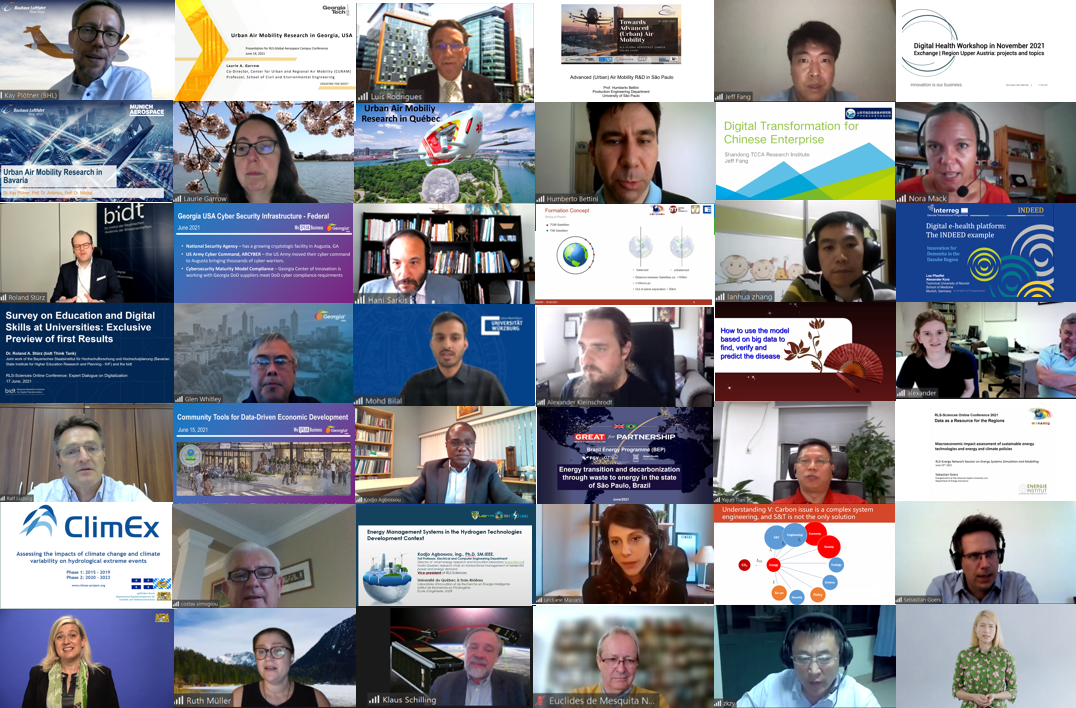
From 14 to 18 June, the RLS-Sciences network met virtually each day for two hours for the RLS-Sciences Online Conference 2021, hosted by Bavaria. In the beginning of 2021, Bavaria proposed a new working scenario for 2021 and 2022 due to the COVID-19 pandemic. This scenario began with the RLS-Sciences Online Conference 2021. This conference built upon the inaugural RLS-Sciences Conference hosted by São Paulo in 2019 and the RLS Virtual Symposium on COVID-19 hosted by Upper Austria in 2020. The overall theme of the 2021 conference was “Data as a Resource for the Regions”.
Read a summary of the RLS-Sciences Online Conference 2021 here.
|
2020
RLS-Sciences at the RLS Virtual Symposium on COVID-19
|
15-16 September, 2020, live and in-person in Linz, Upper Austria
Within the framework of the chairmanship of the "Regional Leaders' Summit", Upper Austria invited the partner regions and the RLS-Sciences Network to a virtual symposium on 15-16 September, 2020. The symposium was an international exchange between politics and science, discussing best practices, challenges, and exit strategies for combatting the COVID-19 pandemic. A new Digital Health Initiative was launched with the aim of expanding the scientific network and conducting interdisciplinary research. Read a summary of the RLS-Sciences activities here. Review the symposium programme here. Review the symposium booklet here. Watch the RLS Virtual Round Table on COVID-19 here (Part 1), here (Part 2 including the RLS-Sciences inputs), and here (Part 3). |